1960-1980: Changes

By the middle of the twentieth century, the district began to experience challenges. Automobile culture continued to grow in popularity, and as new suburban neighborhoods were built outside of the city and new highway systems expanded to these new suburbs, many residents were enticed to relocate. Brand new mid-century modern shopping centers attracted residents away from the neighborhood’s commercial corridor.
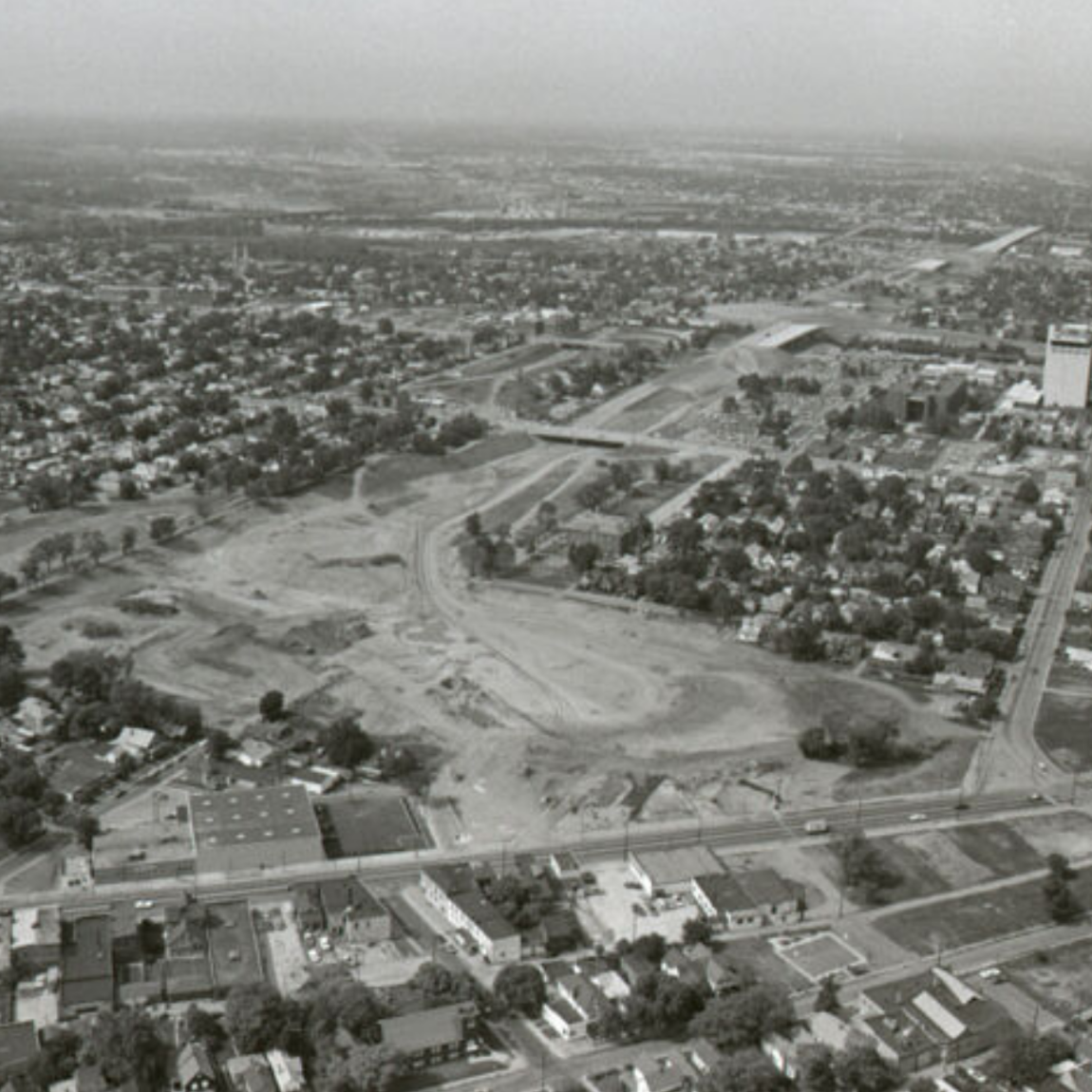
The downturn continued when the 1956 Federal Highway Act made its way to Indianapolis. In the 1960s, the interstate highway routes of I-65, I-70, the I-65/70 “innerloop”, as well as the I-465 outside ring were planned, properties purchased, and families, businesses, churches, and schools displaced en masse. The I-65/70 innerloop, specifically the south split interchange, cut the Fletcher Place neighborhood off from Fountain Square and Bates-Hendricks, while cutting Fountain Square off entirely from downtown’s Central Business District. I-65/70 officially opened in 1976, forever altering our community. Thousands of families lost their homes, significantly decreasing the neighborhood’s population – by some accounts up to 30%.
Around the same time that federal highway construction projects and urban renewal, or the redevelopment policy to completely demolish large sections of older, dense, downtown blocks, projects were decimating downtowns, the birth of the historic preservation movement took off. Historic preservation is a movement that advocates for the preservation of buildings, sites, and landscapes with historical significance; the goal is to better understand our cultural heritage, identity, and communities through the study of our past.
The National Historic Preservation Act of 1966 established the National Register of Historic Places and encouraged states and local municipalities to initiate historic preservation efforts. The following year, the Indianapolis Historic Preservation Commission (IHPC) was enacted by state legislation. The IHPC advocates for local preservation by creating historic preservation districts and conservation districts and providing oversight protections to these districts. First, the Fountain Square commercial corridor, an area covering most of Virginia Avenue, along with parts of Shelby Street and discontiguous parts of Prospect Street, was placed on the National Register in 1977. Following that, the Fletcher Place neighborhood, on the northside of Virginia Avenue between East Street and the interstate, was placed on the National Register and designated with the IHPC both in 1980. Three years later, a National Register designation was approved for the Holy Rosary/Danish Church neighborhood, on the southside of Virginia Avenue between East Street and the interstate. And in 1984, the Fountain Square commercial district also became an IHPC district. What neighborhood buildings do you wish had been saved?
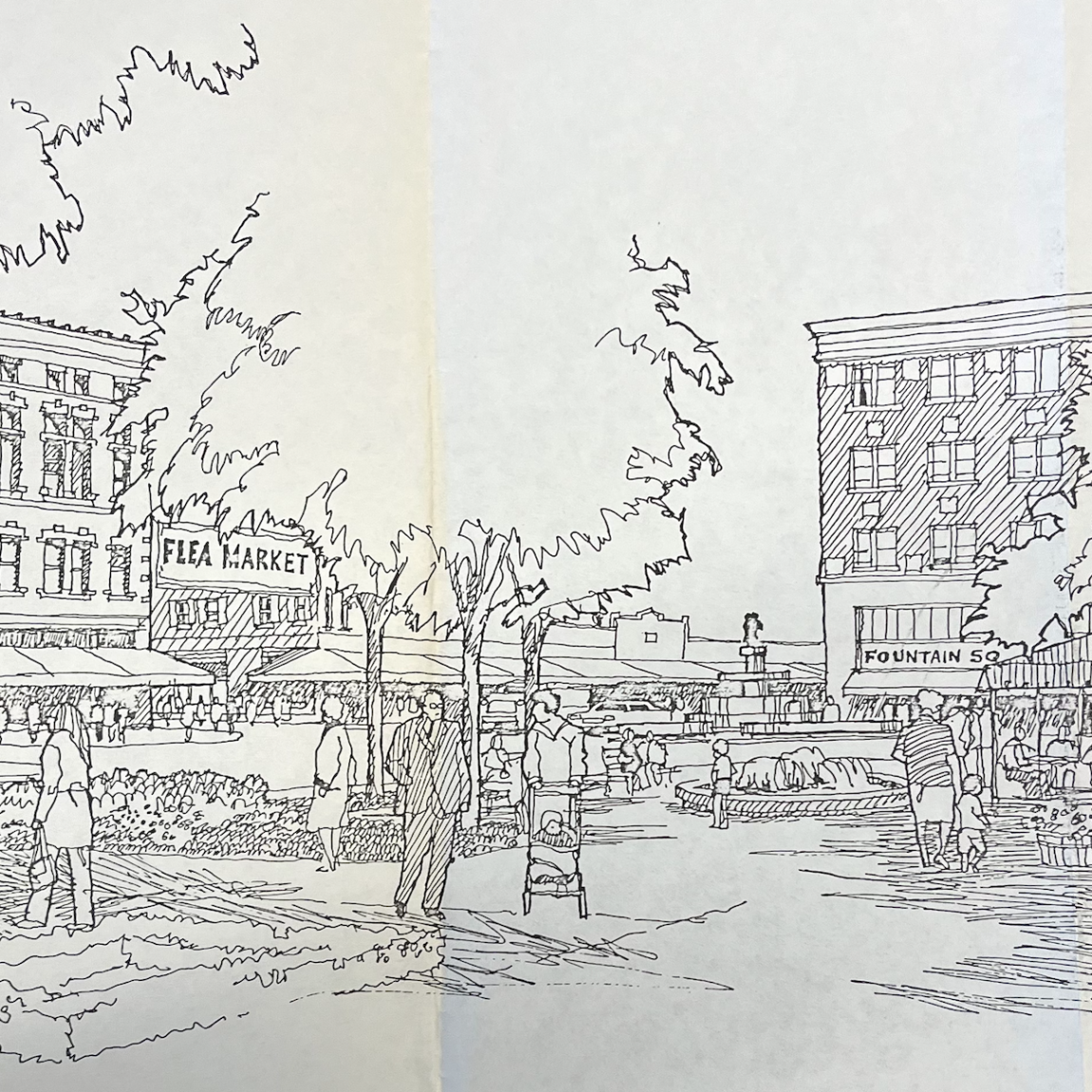
Around the same time that historic preservation efforts were underway, other community revitalization efforts began. The first community development corporation of the area was the Fountain Square & Fletcher Place Investment Corporation, which started around 1983. During this time, the Fountain Square Merchants Association, which was created in the 1910s, also rejuvenated its neighborhood advocacy efforts. These developments helped foster a new sense of place and community into the future.
Photo 1: A conceptual rendering during the revitalization of the neighborhood’s public plaza and main intersection.
Indianapolis Historic Preservation Commission, Fountain Square Files, 1980.
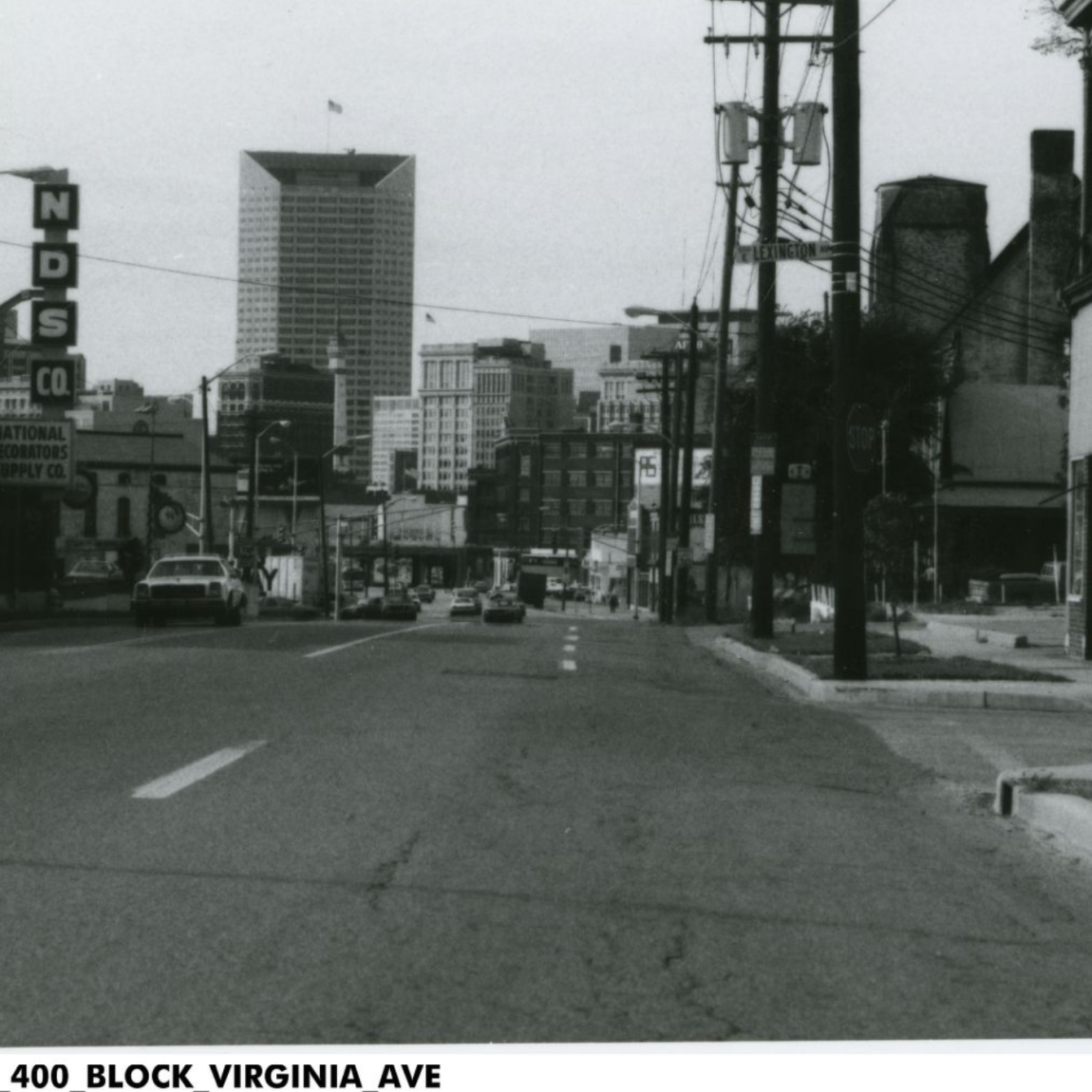
Photo 2: Looking northwest towards downtown from Virginia Avenue at the intersection of Lexington Avenue in the Fletcher Place neighborhood, circa 1980s.
“400 Block Virginia Avenue,” City of Indianapolis, Department of Metropolitan Development Collection, Indiana Historical Society, circa 1980s.
Photo 3: Looking along Virginia Avenue at the southsplit I-65/70 highway project during demolition.
“Aerial View of Highway Construction, Img. 10,” Mayoral Archives, University of Indianapolis, 1974.